

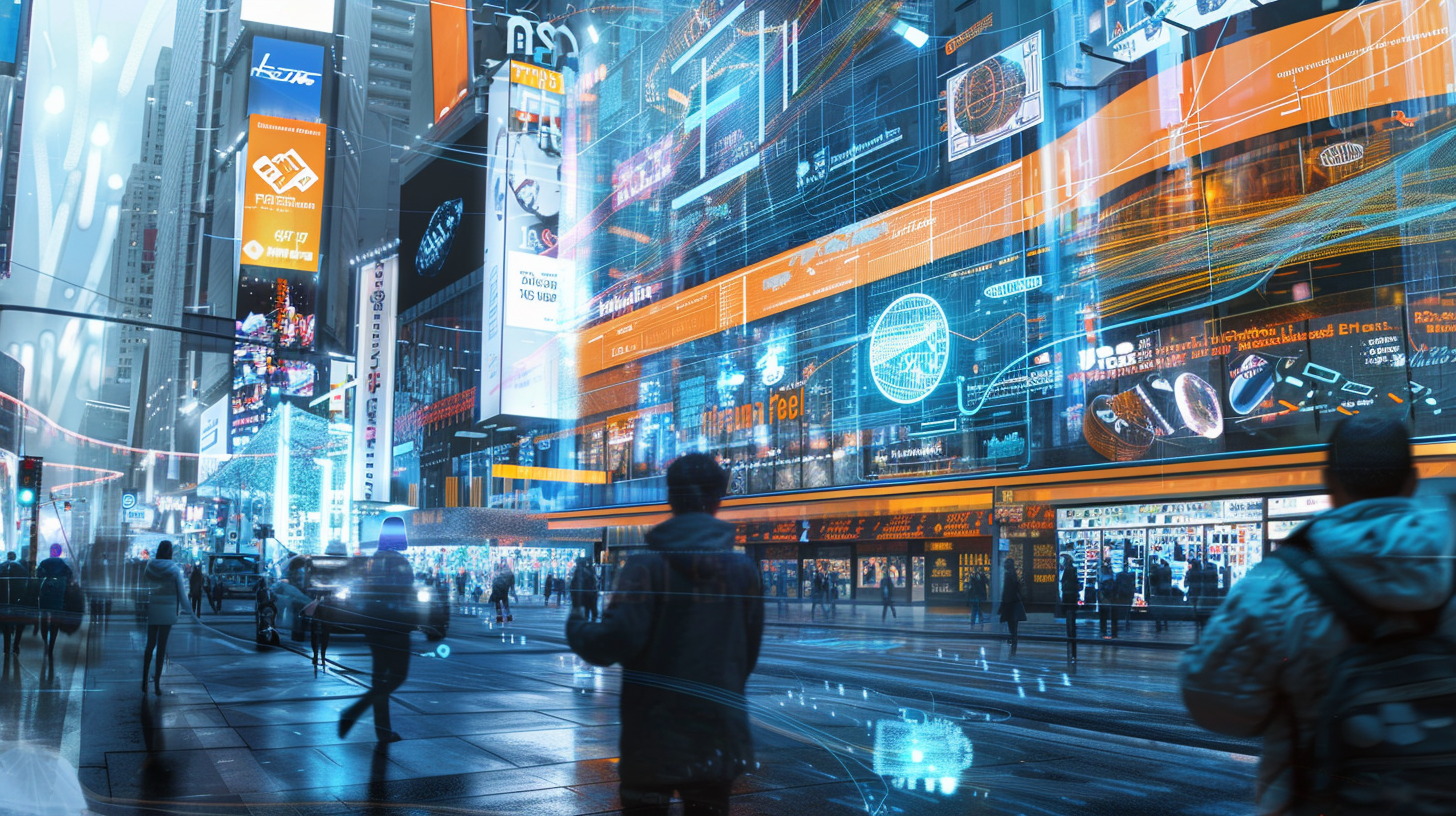
When AI steps out of the screens to transform physical marketing
Artificial intelligence is taking a new step in 2025. After revolutionizing digital marketing, it is now entering the physical world and rethinking traditional market research methods. Three recent cases that change the game.
Accenture bets on three teens and their revolutionary AI
While Accenture invests in a startup founded by Cameron Fink (19), Ned Koh (19) and John Kessler (15), the market research industry trembles. Aaru simulates entire populations thanks to AI agents, replacing focus groups and traditional surveys.
The result? Accenture Song integrates Lumen into all its marketing services. The goal: simulate any target audience and deliver behavioral predictions in minutes rather than weeks.
Credibility? Last year, Aaru predicted the outcome of the New York Democratic primaries with a margin of 371 votes. Cameron Fink asserts: “The simulation will be what differentiates the companies that lead the market.”
The context justifies this enthusiasm: 85% of marketing directors say it is harder than ever to stay relevant.
Useful links:
HubSpot releases its AI agents into the wild
HubSpot pushes all its marketing teams to experiment with Breeze agents, with “incredible results.” No more basic chatbots: these intelligent agents now orchestrate entire campaigns autonomously.
Concretely? The Customer Agent handles customer queries 24/7, the Prospecting Agent searches for and engages prospects automatically, the Content Agent creates content across all channels.
The major evolution: unlike traditional automation tools, these systems process information continuously across multiple channels. They adjust ad bids, optimize email send times, personalize websites in real time.
Deloitte predicts that 25% of companies using generative AI will deploy AI agents by 2025. HubSpot is getting ahead.
Useful links:
When billboards recognize you
Imagine: you buy sneakers online, and three days later, the advertising screen in your mall offers you matching socks. This vision is becoming a reality.
Since 2016, General Motors introduced the first interactive billboard with facial recognition. Today, this technology is becoming mainstream.
Cameras detect age, gender, expression, movement and trigger specific videos. Screens adapt in real time to the detected demographic profiles.
The effectiveness is proven: location-based marketing improves response rates by up to 5x, with open rates 293% higher in targeted campaigns.
You are already targeted on social networks. The next shift? Hyper-personalization in the physical world.
Useful links:
AI no longer follows behaviors; it shapes them
These three examples converge toward the same revolution: marketing AI is crossing the digital boundaries. Behavioral simulation, intelligent automation, and physical personalization anticipate and influence intentions rather than merely follow them.
Companies that master this transition gain a decisive edge.
✨ The idea to steal this week
Test your personas with AI agents before launching your next campaign. Rather than spending thousands of euros on traditional studies, validate your marketing hypotheses in a few hours.
If you are using HubSpot, activate a Breeze agent now. Start small, measure the impact, and scale gradually.
Pub & Pixels – Your weekly AI marketing briefing
Jean-Marc Segati
Nextage.ai