

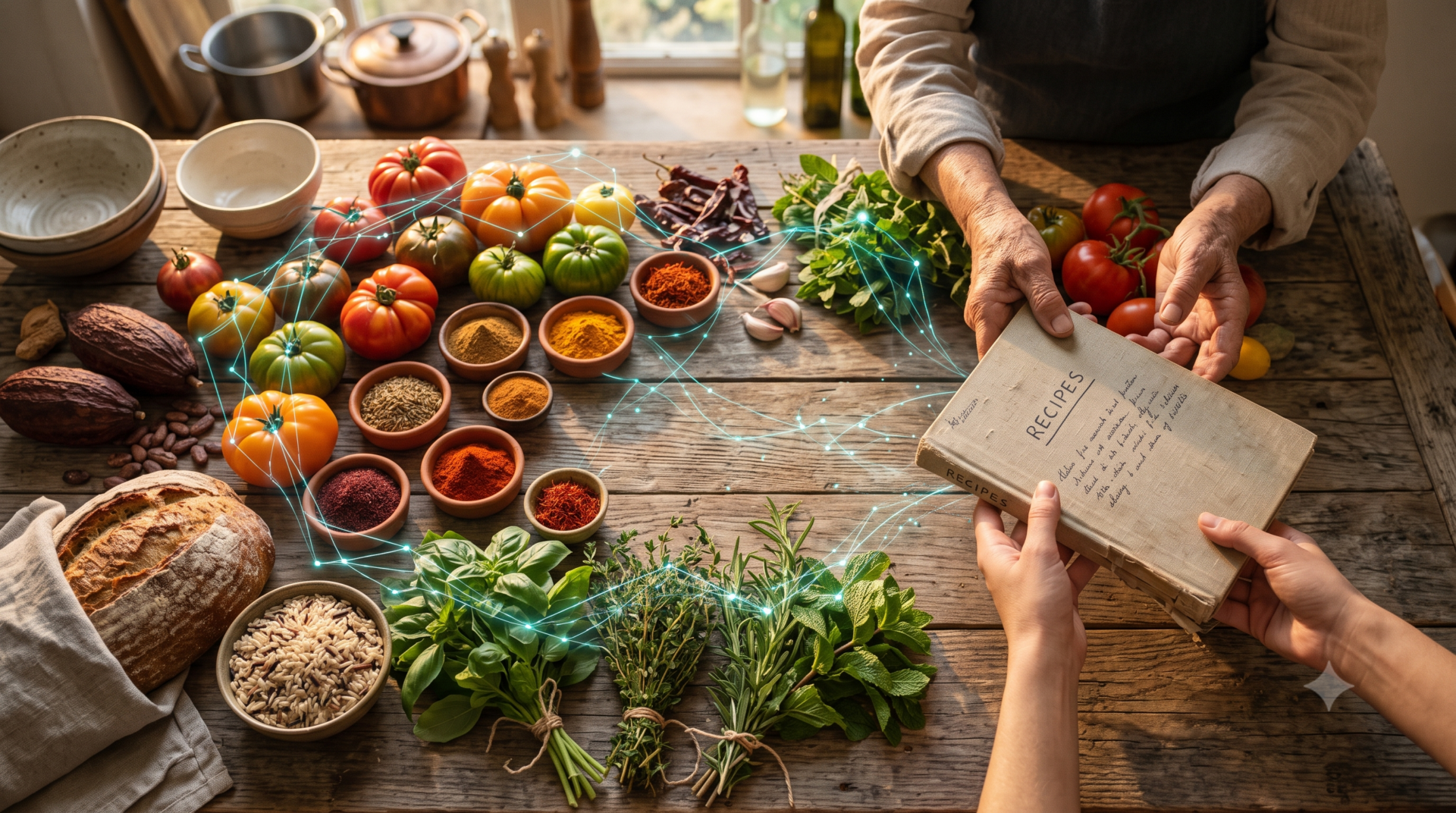
On June 16 last, Sustainable Gastronomy Week opened, carried by the youth chapters of the World Food Forum. The theme: “Celebrating Food Heritage.” From Morocco to Bhutan, from Ivory Coast to Nigeria, chefs and food professionals have put an obvious truth on the table — the oral transmission of a recipe, the gesture of a cook who knows without weighing, is already technology. Slow technology. Patient. That has never taken root in ten generations.
Ask yourself: how long can an AI system go without an update?
I have been saying for months that AI is a creative multiplier, not a substitute. Here is the example that proves it better than all my slides.
Look at the other end of the spectrum. The Sustainable Foods Summit, in January in San Francisco, showed an AI that assesses supply risks, invents alternative proteins by precision fermentation, redesigns food systems in the face of climate disruption. Impressive. Necessary, even. But let’s be clear: none of that replaces the collective memory that a dish carries within it. No database can replicate a link to the territory.
So let’s stop pitting the two against each other. Heritage is the raw material. AI is the tool that documents it before it disappears, that makes it travel, that makes it visible beyond the village. It’s not more complicated than that. And it’s not less demanding either: preserving has never meant freezing.
This observation doesn’t stop at the plate. In my profession, I still hear far too often that technology will replace creative know-how. No. It prolongs it — if, and only if, we take the time to listen to it before programming it. Otherwise, it merely accelerates the void.
The real question isn’t “AI or tradition.” It’s: who still listens long enough to transmit something worth accelerating?
#GastronomieDurable #SustainableGastronomyWeek #FoodHeritage #ArtificialIntelligence #WorldFoodForum