

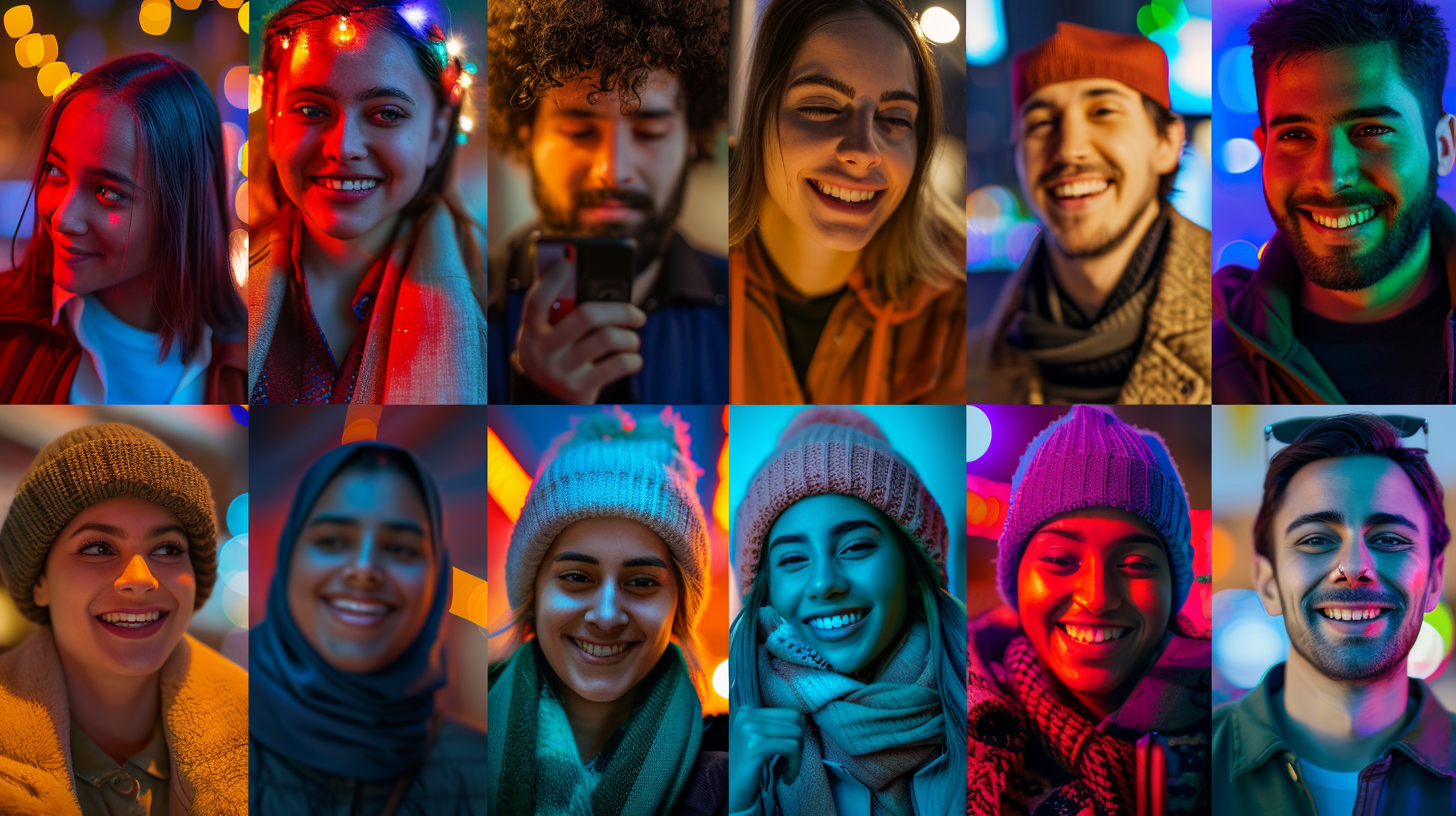
Micro-audiences and AI: between legal compliance and unbridled creativity
AI marketing is crossing a new threshold in 2025. While Europe imposes its rules on predictive segmentation, the United States and India prove that micro-audiences are no longer just a compliance issue, but a full-fledged creative playground. Three examples illustrating this shift.
⚖️ Europe: Micro-audiences under the regulatory microscope
The European AI Act reshuffles the cards of advertising segmentation. From now on, every use of weak signals — browsing, social interactions, shopping habits — must be transparent and justifiable.
What changes concretely: Advertisers must be able to explain each segment created, renew consents regularly, and guarantee a right to explanation for any targeting used. Predictive personalization becomes a balancing act between performance and compliance.
The opportunity: This regulatory constraint opens up avenues for service innovation. Brands that master this transparency can transform compliance into differentiation. While your competitors adapt to the legal texts, you build trust.
What is emerging: AI enables hyper-personalization like never before, but the legal framework requires it to be fully explainable. This tension creates a new territory for agencies capable of navigating between efficiency and ethics.
Popeyes USA: AI generates city-specific personalized rap
To launch its new wraps, Popeyes turned TikTok and Instagram into platforms for localized battle rap. The algorithm, fed by ultra-local trends, generated on-the-fly personalized clips by city, time, and the social mood of the moment.
The mechanism: The most engaging creations were identified by the AI engine and massively amplified, creating a loop between creative intent, social engagement, and conversion. Each urban micro-community received “its” battle rap.
What works here: Popeyes wasn’t targeting demographic audiences, but local cultural moments. AI captured the codes, expressions, and references of each territory to create instant relevance.
The lesson: The micro-audience is no longer just demographic; it becomes contextual and cultural. The most effective AI does not segment profiles, it detects local moods and codes.
https://zeely.ai/blog/ai-powered-marketing-campaigns/
Sephora USA: Skin analysis that adapts to context
Sephora is testing an advanced personalization approach with its Smart Skin Scan. The AI analyzes thousands of skin points in real time, then adapts its recommendations to local weather, the season, and the urban context.
How it works: Each micro-segment receives its personalized routines, its tailored tutorials, its continuously optimized offers. The system learns and adjusts with every interaction, creating a beauty expertise that evolves with you.
Observed results: Improved loyalty and reduced product returns. When personalization becomes truly relevant, it delivers measurable value.
Omnichannel approach: AI works online and in-store, turning every touchpoint into an opportunity for contextualized expertise. Cross-channel coherence is starting to become a reality.
https://zeely.ai/blog/ai-powered-marketing-campaigns/
Cadbury India: Shah Rukh Khan personalized for each store
Cadbury leveraged large-scale deepfake marketing in India. During Diwali, every small retailer could generate their own personalized advertisement featuring Shah Rukh Khan — the biggest Bollywood star — explicitly naming their shop.
The scale: Millions of local versions of a national spot. Each micro-audience saw “its” version, propelling local activation, credibility, and simultaneous virality.
Cultural adaptation: Cadbury understood that India operates as millions of micro-markets rather than a single market. Generative AI made possible this mass personalization that would be impossible to do manually.
What this reveals: Beyond technical optimization, AI can create authentic moments of emotional connection at industrial scale. This campaign becomes a reference for creative micro-personalization.
https://digitaldefynd.com/IQ/ai-marketing-campaigns/
What these examples teach us
These four cases reveal a significant evolution: the micro-audience is no longer merely a regulatory constraint or an optimization technique. It becomes a true territory of marketing innovation.
Europe imposes transparency, the United States leverages cultural context, and India demonstrates the power of mastered deepfake. Three complementary approaches to the same transformation.
Takeaway: Brands that stand out will not necessarily be those that segment best, but those that create the most authentic relevance for each micro-context.
✨ The idea to explore this week
Revisit your current segments with this question: are your micro-audiences based on who your customers are, or on what they experience at the moment you reach them?
Like Popeyes: test a culture-driven moments approach rather than demographics-only.